
Ben’s Story
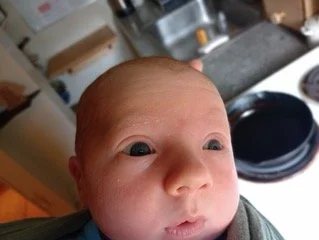
From the time I was in my early 20s, I knew I wanted a midwife and hoped to deliver my baby at home. But during pregnancy, I learned birth isn’t simply “home vs. hospital.” There are countless paths, and ours became one I never could have imagined: a vaginal breech delivery at UCSF — something that was still extraordinarily rare in 2025.
Without Michelle, I almost certainly would have had a major abdominal surgery and weeks of recovery. Instead, I walked out of the hospital less than eight hours after delivering our beautiful son.
When we first found out we were pregnant, I felt overwhelmed and strangely alone. We weren’t ready to share the news widely yet, and as a researcher, I desperately wanted information and reassurance. Our dear friend had recently had an incredibly supportive home birth with Michelle, so we reached out for an interview. That decision changed our lives.
The moment I spoke with Michelle, I felt calmer. I knew we were going to receive the kind of care our whole family needed. Because of scheduling logistics, we ended up doing shared care with another midwife Michelle worked closely with, Pearl Yu. Together, they were an absolute dream team.
Our birth story really ramped up at 36 weeks when we discovered Ben was in a breech position. Just a week earlier, Michelle had noted he was head down, so the news completely surprised us. Somehow, though, neither Michelle nor Pearl seemed remotely concerned. I’m still not convinced it’s possible to rattle either of them.
Michelle immediately began helping us prepare for every possibility — including the chance that Ben might stay breech until birth. Midwives have not been able to deliver breech-presenting babies at home in California since 2014.
She gave me endless ideas for encouraging him to turn: headstands in the pool, Spinning Babies exercises, stretches, inversions, anything we could try. Turning him became my full-time job. However, the baby seemed deeply committed to his position.
That’s when Michelle told us UCSF had a vaginal breech birth program. She immediately went into action mode and became our advocate, helping us navigate interviews, phone calls, ultrasounds, and two external cephalic versions.
During our first version attempt, Michelle sat with us for hours. She coached us on the right questions to ask and helped us communicate how strongly we wanted a vaginal delivery. Without her, we wouldn’t have known the right way to advocate for ourselves.
Eventually, we learned we qualified for the program. UCSF told us that when labor began, we simply needed to call, and if the right staff were available, they would attempt a vaginal breech birth.
So while we waited, we immersed ourselves in learning everything we could. We watched countless Breech Without Borders videos and read extensively about physiological breech birth. By the end, I felt like I had accidentally acquired a niche medical specialty.
The night before labor started, I had mild, period-like cramps all night long. We suspected things were beginning, but otherwise the evening felt surprisingly normal. The next morning, Alex still went to work at 6 a.m., prepared to rush home at any moment.
By evening, I asked him to bring home RT Rotisserie chicken and brussels sprouts. At that point I was laboring quietly in the bathtub, feeling contractions that were still far apart and manageable.
At about 6pm we ate dinner together while timing contractions on an app we downloaded at the very last minute — exactly the kind of calm, organized preparation you want before childbirth.
As we watched the timer, we realized things were intensifying quickly.
Alex texted Pearl, called our doula Christy, and contacted UCSF Labor & Delivery.
Pearl and Christy arrived around 8 p.m. Pearl checked me and found I was only 1 centimeter dilated, though very effaced. We also thought my water might have broken, but testing showed it hadn’t.
After that, things started to blur together.
I lost the ability to talk during contractions. Resting between them became harder and harder. The only position I could tolerate was hands and knees. The idea of lying on my back felt absolutely horrifying.
Alex stayed beside me while Christy quietly cared for both of us — encouraging me to hydrate, helping me move, and bringing me a hot water bottle for my intense back labor. At one point I vomited up my rotisserie chicken dinner.
The TENS unit Christy applied to my back became the only pain management I cared about.
By midnight, the contractions had transformed completely. I finally understood why breathing techniques matter so much in labor. It wasn’t just painful — it felt overwhelming and suffocating.
Pearl returned and stayed with us. She suggested squat lunges and encouraged me through transition. At one point, because I kept feeling pressure like I needed to poop, she gently suggested I put on a diaper so I could stop worrying about it and relax. Just another humbling aspect of labor.
At 1:35 a.m., I suddenly felt what seemed like a small water balloon pop in the diaper. My water had broken, and I was relieved because it felt like things were moving forward.
Soon, pushing started to feel completely involuntary. It actually started to feel good in a way. Around 2:30 a.m., Pearl said it was time to go to the hospital. She had intentionally kept us home as long as she could. The less time in the hospital the less time there would be for more intervention.
Alex pulled the car into the middle of the street with the flashers on while I clutched pillows from the bed and collapsed during contractions. Somehow, everyone managed to get me into the back seat before the next one hit.
With terrible timing, the TENS unit battery died. I thought I might genuinely lose my mind, but Christy replaced the batteries with lightening speed while Alex called UCSF at 2:44 a.m.
It must have been a chaotic night because I could hear the nurse on speakerphone trying to divert us elsewhere. But once Alex explained we were delivering a breech baby, everything changed.
“What’s her name?” she asked.
Then: “No. She HAS to come here.”
When Alex explained I was already pushing, they suggested the nearest hospital or even calling an ambulance. But Alex said, “No, we’re driving to UCSF.”
He proceeded to hit what was probably a personal record for red lights run in San Francisco.
The car ride may have been one of the hardest parts of labor. I was still on my hands and knees in the back seat, and every time Alex braked, my head slammed into the seat in front of me. We made it to UCSF in about 20 minutes and the paramedics were waiting for us.
I climbed onto a gurney and I remember the paramedics casually chatting about football in the elevator as my fingers repeatedly got smashed into the rails while we rode the elevator up.
Meanwhile, Alex remembers a small herd of doctors running past him discussing the details of a vaginal breech birth. It was clear this was not an everyday event.
During our consultations, I had been told I would likely need to deliver in the OR with an epidural in case of emergency surgery. Instead, I arrived in a regular labor room packed with about twelve doctors and nurses and thankfully, no epidural was suggested or required.
Because of Michelle and Pearl, I felt confident saying no to interventions I didn’t want. Having Pearl there grounded me, and I could tell the physicians respected her.
At some point I stripped completely naked because I was so unbearably hot. Our original plan was to have our baby in our quiet home so it was helpful for me to turn away from the crowd so I could focus only on Pearl, Christy, and Alex.
Dr. Rubashkin introduced himself, and we agreed to place a small monitor on Ben’s butt so they could closely track his heart rate. Thankfully, his heart tones remained steady throughout labor.
Then another doctor arrived: Dr. Lamar, the head of breech delivery at UCSF. She had come in specifically for us.
I pushed for about two and a half hours. During consultations I had been told I would only be “allowed” to push for two hours before a C-section. But it felt like the doctors let the process unfold as it should.
I remember Pearl constantly re-centering me — helping me redirect my energy and trust my body.
At one point I started yelling loudly through contractions, and Pearl gently said, “Take that energy and push it down instead.” It worked immediately.
When I felt like I couldn’t do it anymore, she calmly told me: “You ARE doing it.”
Eventually, I could feel Ben with my fingers before anyone else could even see him.
Then suddenly — his testicles appeared first.
Then his little butt.
He promptly pooped and peed all over the bed.
A few pushes later, his legs flopped out, followed by his torso. At one point his little body was dangling below me while he did tiny “crunches,” which we knew from Michelle and Pearl was actually reassuring.
Then his right arm emerged.
Then, with one final push, his left arm and head came out together.
Ben was born at 5:24 a.m. on August 22, 2025.
He looked gray at first, but Michelle and Pearl had prepared us for this. Breech babies can be sleepy when they arrive. I wasn’t worried at all.
His cord was very short, so I couldn’t immediately bring him to my chest. I remember Dr. Lamar rubbing him vigorously while encouraging me to talk to him.
I kept saying, “My baby! My baby!” and I remember hugging and kissing Alex.
Then color slowly spread across his body in pink blotches, and finally we heard a wet, rattly cry.
Alex cut the cord quickly so the nurses could suction fluid from his lungs under a warmer. Once his cries sounded stronger and clearer, they finally brought him back to me.
Holding him for the first time was incredible.
After the doctors repaired a tiny tear and pressed on my stomach, Pearl immediately helped me latch him for breastfeeding. I was flooded with hormones and happiness beyond anything I had ever experienced.
I also demolished pancakes, eggs, and basically every snack they brought me.
Pearl and Christy stayed with us for much of the day and Auntie Jessica came to see us! Because we had midwife care and a smooth recovery, we left the hospital less than eight hours after arriving.
Pearl even came back to our house later that same day.
When Michelle returned from out of town, she and Pearl continued caring for us together during the postpartum weeks. Breastfeeding came naturally, and we felt deeply supported every step of the way.
None of this would have been possible without our midwives. They helped us achieve the birth we hoped for while making us feel informed, respected, safe, and unbelievably cared for.
Quisque iaculis facilisis lacinia. Mauris euismod pellentesque tellus sit amet mollis.